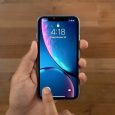
If you’ve felt like the iPhone has been living on a steady diet of “nice upgrades” (faster chip, better camera, new color that somehow becomes your entire
personality), Bloomberg says the next few years are where Apple finally stops tiptoeing and starts rearranging the furniture.
In Mark Gurman’s reporting for Bloomberg, Apple’s iPhone roadmap points to a three-year stretch of meaningful change: new form factors, a rethought lineup,
more Apple-designed connectivity hardware, and a long game toward a cleaner, more “all-screen” look. In other words: less “here’s the new iPhone,” more
“here’s the new iPhone era.”
Bloomberg’s Big Thesis: Apple Is Rebuilding the iPhone From the Inside Out
Bloomberg’s reporting frames the iPhone’s near future as a coordinated plan instead of isolated upgrades. The themes are consistent:
Apple keeps pulling key components under its own roof (think modems and wireless chips), experiments with dramatic industrial design (the ultra-thin “Air”
concept), and saves the most headline-grabbing hardware for moments when it can actually scale it reliably (hello, foldable).
That matters because Apple doesn’t just sell a phone; it sells a schedule. The annual fall keynote is basically a holiday for camera comparisons. But
Bloomberg suggests Apple may spread big iPhone launches out more strategicallymaking room for premium “Pro” cycles, a foldable tier, and the kind of
anniversary model that screams “this is the one you’ll remember.”
Year One: 2026 Looks Like the Foldable iPhone’s Debut (and a New Release Rhythm)
The Foldable iPhone: Not “If,” but “How Apple”
Bloomberg’s roadmap points to Apple introducing its first foldable iPhone in 2026reportedly alongside high-end models. If that happens, don’t expect Apple
to treat foldability like a party trick. The company tends to enter categories late, then obsess over the annoying parts everyone else accepts (creases,
hinges, thickness, durability, app behavior).
The most Apple-ish foldable outcome is a device that’s less “flip phone nostalgia” and more “tiny iPad that also makes calls.” Reports circulating in the
Apple ecosystem describe a book-style foldable with a larger inner display and a usable outer screenaimed at reading, multitasking, creative work, and
travel-friendly productivity. The moment Apple puts iPad-ish proportions in your pocket, iOS features like split-view behaviors, drag-and-drop workflows,
and “do more than one thing at once” suddenly become the main character.
Why 2026 Also Matters: The Lineup Starts Acting Like a Lineup
A foldable doesn’t fit neatly into the current “base / Plus / Pro / Pro Max” story. That’s why Bloomberg’s reporting about a release schedule makeover is
important. Apple may be moving toward a world where:
- Pro models stay the fall headline (the prestige drop, the camera flex, the “this is the one YouTubers will slow-motion unbox”).
- Other models arrive later, creating a second wave that keeps the iPhone in the spotlight without forcing everything into one event.
- New categorieslike foldablesget room to breathe without cannibalizing the entire lineup narrative.
Practically, that could mean fewer “four phones at once” launches and more staged product moments. For Apple, that’s not just marketingit’s supply chain
sanity. For buyers, it means the “best time to upgrade” question gets more interesting (and possibly more annoying).
Under-the-Hood Shift: Apple Silicon Moves Deeper Into Connectivity
One of the biggest iPhone changes may be the one you never see: Apple increasingly designing the chips that handle how your iPhone connects to the world.
Bloomberg has described a multi-year effort to roll out Apple-built cellular modems, with early versions expected to show up in lower-risk products first,
then scale upward as performance improves.
Why should anyone care about a modem? Because connectivity touches everything: battery life, heat, signal stability, gaming latency, FaceTime quality, and how
smoothly your phone behaves when you’re in a crowded stadium screaming at a concert while trying to upload a shaky video that proves you were there.
Bloomberg has also reported Apple’s plans to move toward in-house Wi-Fi and Bluetooth chips. That’s the same playbook Apple used with Apple Silicon on the
Mac: control more of the stack, integrate more tightly, and optimize performance in ways third-party parts don’t always allow.
Year Two: 2027 Points Toward an “All-Screen” Moment (and a Premium iPhone That Feels Different)
The 20th Anniversary Effect: Apple Loves a Symbolic Hardware Flex
The original iPhone debuted in 2007, which makes 2027 the 20th anniversary year. Bloomberg-linked reporting and industry chatter increasingly converge on a
simple idea: Apple wants an anniversary iPhone that looks unmistakably new. Not “slightly different edges,” but “you can tell from across the room.”
The most believable path is the gradual disappearance of front-facing interruptions: smaller cutouts, more sensors hidden under the display, and eventually a
cleaner all-screen look. You won’t wake up one day to a magical, invisible camera with no compromisesphysics is rude like thatbut Apple can stage the
transition across product tiers and years.
From Dynamic Island to “Where Did It Go?”
Apple already turned the notch into a UI feature with Dynamic Island. The next evolution is obvious: make it smaller, then make it optional, then make it
vanish. A realistic 2027 story looks like:
- More components under the display (Face ID hardware and/or the selfie camera moving beneath the panel in stages).
- Cleaner front design that leans into uninterrupted contentespecially for video, reading, and gaming.
- Software that adapts so developers don’t have to rebuild their apps every time the “top area” changes shape.
If Apple nails this, the iPhone will feel less like a “screen with a camera hole” and more like a single slab of interactive glassan idea Apple has been
chasing since the iPhone X made the home button disappear.
AI as a Quiet Driver: More On-Device Intelligence, More Hardware Pressure
Apple’s push into on-device AI features (marketed through Apple Intelligence and iOS upgrades) puts pressure on iPhone hardware in three places:
memory (RAM), thermal performance, and power efficiency. Apple has already made recent iPhone generations more capable for these workloads, and the next
three years likely bring:
- More RAM across the lineup so AI features aren’t reserved for “Pro-only” buyers forever.
- More neural performance in chips (faster on-device processing for writing tools, image tasks, and personalization).
- Smarter battery management so AI doesn’t feel like a background app that eats your afternoon.
The twist is that Apple’s AI ambition also rewards Apple’s silicon strategy. The more Apple controls the modem, wireless chips, and power management, the
easier it is to make “intelligent” features feel seamless instead of heavy.
Year Three: 2028 Becomes the Year the “New iPhone” Becomes Normal
Foldables Go From “First Gen” to “Actually Mature”
If 2026 introduces a foldable and 2027 refines Apple’s premium design direction, 2028 is where the long tail starts: second-generation foldables, trickle-down
design language, and a lineup that’s less “four phones” and more “phone families.”
The pattern Apple follows in new categories is consistent: launch carefully, iterate quickly, then expand when the product story is clear. By 2028, the
foldable iPhoneif Apple launches it in 2026could benefit from:
- Better hinge engineering (thinner, stronger, fewer moving parts that can annoy you).
- Display improvements (higher yield, fewer artifacts, better crease mitigation, more consistent brightness).
- App behavior that feels “native” (less like a stretched phone, more like a pocketable productivity device).
The Connectivity Stack Becomes an Apple Signature
Bloomberg has described Apple’s multi-year modem plan as a gradual climb: start with simpler deployments, then work up to premium performance. By 2028, the
payoff could be less drama around carrier performance and more consistent behavior across regions and networksplus tighter integration with iOS features like
satellite capabilities, location services, and intelligent network switching.
And if Apple’s in-house Wi-Fi/Bluetooth strategy continues, the iPhone’s wireless experience could start to feel more “Apple-like” in the way AirPods pairing
felt like magic compared to old-school Bluetooth headaches.
The “Air” Idea: Thinness as a Testing Ground for the Future
Apple has already shown it’s willing to carve out a mid-tier identity built around thinness and designan “Air” concept that signals engineering priorities:
lighter materials, smarter internal stacking, and efficiency gains that make premium features possible without premium bulk.
In the next three years, ultra-thin design isn’t just about aesthetics. Thinness forces innovation in:
- Battery chemistry and packaging (more power in less space).
- Thermal design (performance without turning your phone into a tiny hand warmer).
- Camera layout (better sensors without a wobble that makes your phone tap-dance on a table).
Think of “Air” as Apple’s prototype mindset in a consumer-ready wrapper: it’s how the company practices for harder deviceslike foldableswithout asking
everyone to jump straight into a brand-new category.
What Should iPhone Owners Actually Do With This Information?
1) Treat Roadmaps as Direction, Not Destiny
Apple doesn’t confirm future products, and supply chain reality loves to humble even the best plans. Foldables are hard. Under-display tech is hard. Changing
a release schedule is hard. Bloomberg’s reporting is useful because it shows direction and priorities, but it’s not a guarantee that every step lands on the
exact year printed on the rumor calendar.
2) Upgrade Strategy Gets More Personal
If Apple staggers releases and expands categories, the “best iPhone” will depend more on how you use it:
- Creators may wait for the biggest camera jumps and premium silicon.
- Travelers may care about connectivity, battery, and durability more than megapixels.
- Multitaskers might finally have a reason to consider foldable hardwareif Apple delivers.
- Minimalists could prefer the Air-style approach: lighter, thinner, still powerful.
3) Expect the iPhone to Feel Less Like a Gadget and More Like a Platform
Over the next three years, iPhone upgrades are likely to be less about one killer feature and more about the overall experience: AI features that feel native,
wireless connections that behave, hardware that lasts longer, and designs that look meaningfully different.
If Apple is rebuilding the iPhone, it’s also rebuilding what “normal iPhone life” feels like.
Experience Add-On: What Using These Future iPhones Might Feel Like (500+ Words)
Forecasting iPhone features is fun, but the real question is: what changes in your day when the phone changes? Here are a few realistic “experience shifts”
that could happen if Bloomberg’s three-year iPhone arc plays out.
In 2026, the iPhone might start feeling like two different products depending on what you buy. A foldable iPhone wouldn’t just be “an iPhone
that bends.” It would change how you handle everyday tasks. Picture opening your phone to review a boarding pass, a map, and a group chat at the same time
not by frantically swapping apps, but by letting multiple panels share the screen like a mini tablet. Reading becomes less squinty. Editing photos feels less
cramped. Even shopping (the adult version of Pokémon, apparently) becomes less “scroll-scroll-scroll” and more “compare two things side-by-side without
losing your mind.”
Also in 2026, connectivity improvements could become the sleeper hit. Nobody brags at a party about their modem. But everyone notices when
their phone stops dropping calls, loads videos faster in crowded places, or doesn’t turn into a hot brick during long navigation sessions. If Apple’s
in-house modem and wireless strategy matures, the iPhone experience becomes calmer. Less “why is my signal doing interpretive dance?” and more “it just
works,” whichhistoricallyhas been Apple’s favorite form of magic.
By 2027, the front of the iPhone could feel dramatically different. When the screen looks cleaner, you interact with content differently.
Photos look more immersive because nothing interrupts them. Games feel more cinematic. Reading doesn’t feel like you’re constantly aware of the hardware.
Even small thingslike lining up a photo or scanning a documentbecome easier when the display is uninterrupted and the UI can take full advantage of it.
If Apple pulls off a more all-screen design around the iPhone’s 20th anniversary, the “wow” factor won’t just be aesthetic. It’ll be psychological: the
phone feels less like a device and more like a window.
AI features will likely change the iPhone experience in tiny, frequent ways rather than one giant moment. Expect more “help me do this faster”
and less “robot takeover.” The most useful AI is the kind you stop noticing because it’s woven into normal life: summarizing a long thread before you reply,
cleaning up a photo in two taps, suggesting a better calendar time, or making your keyboard feel like it finally understands you’re typing quickly on purpose.
If Apple keeps pushing on-device intelligence, you may also feel more comfortable using itbecause the device can process more locally rather than shipping
everything out to the cloud.
In 2028, the biggest experience change might be that “new iPhone” stops meaning one thing. Some people will treat a foldable as their primary
computer-on-the-go. Others will pick an Air-style phone because it’s light and elegant and doesn’t require cargo pockets. Pro buyers will keep chasing the
best cameras and the most consistent performance. And the baseline model may become the “good enough” phone in the best way: powerful, reliable, and less
expensive because Apple has multiple premium paths above it.
The fun part is that all these potential changes point toward one outcome: the iPhone becomes less about yearly hype and more about choosing a form factor and
experience that matches your life. That’s a bigger shift than a new camera bumpbecause it changes how people think about the iPhone in the first place.
Conclusion
Bloomberg’s reporting suggests Apple is setting up a three-year iPhone transformation: a foldable step in 2026, a cleaner premium design push in 2027, and a
broader normalization of new form factors and Apple-controlled components by 2028. If the roadmap holds, the iPhone won’t just get fasterit will start to
feel meaningfully different in your hand, on your desk, and in your daily routine.