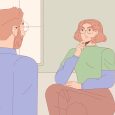
Public transit is supposed to be simple: get on, hold your bag, avoid eye contact, and arrive at your stop with your dignity mostly intact. But every now and then, a seat becomes the center of a full-blown social drama. That is exactly why the viral story behind “I Needed The Seat” hit such a nerve. On the surface, it is a satisfying tale of a rude adult being embarrassed. Underneath, it is something more useful: a reminder that disability does not always look the way strangers expect it to look.
The story spread because it taps into a very modern tension. People want to be considerate, but they also make snap judgments. They see a teenager in a priority seat and assume attitude. They see someone without a cane, wheelchair, or visible brace and assume health. Then reality walks in, sits down, and makes those assumptions look very silly.
This is what makes the story memorable and surprisingly important. It is not just internet schadenfreude with a side of commuter chaos. It is a case study in invisible disabilities, public etiquette, and why minding your own business is still one of the most underrated social skills in America.
What Happened in the Viral Seat Story?
The now-viral retelling centers on a teen rider using seating reserved for disabled passengers. An older woman approached and demanded the seat, apparently assuming the teen was young, healthy, and simply taking advantage of the system. Instead of immediately launching into a medical TED Talk for strangers on a train, the teen resisted, and the confrontation escalated. Eventually, the teen revealed proof of a condition or injury that justified needing the seat. Cue the awkward silence. Cue the red face. Cue the internet collectively saying, “Well, that backfired.”
That basic sequence is familiar because versions of it happen all the time. The details change. Sometimes it is a bus, sometimes a train, sometimes a subway platform full of people pretending not to hear the conflict while absolutely hearing every word. But the pattern stays the same: a person is judged by appearance, challenged in public, and forced to explain something deeply personal just to keep a seat that was meant for them in the first place.
That is why this story landed so hard online. The teen did not merely “win” an argument. The teen exposed the flaw in the argument itself: the idea that strangers are somehow qualified to visually audit another person’s body.
Why This Story Resonates So Strongly
Not all disabilities announce themselves
One of the biggest reasons the story blew up is that it spotlights a truth many people still struggle with: not all disabilities are visible. A person may look fine while dealing with chronic pain, dizziness, balance issues, neurological conditions, autoimmune disease, fatigue disorders, joint instability, or recovery from an injury. To everyone else, they may simply look young, quiet, and inconveniently seated.
That visual mismatch creates tension in public spaces. We have been trained to identify disability through obvious cues, but real life is messier than a symbol on a sign. Some people need a seat because standing for even a few minutes can trigger pain, faintness, nausea, disorientation, or exhaustion. Others can walk short distances but cannot safely remain upright on a moving train. If your definition of disability begins and ends with what you can spot in three seconds, you are not evaluating need. You are guessing.
Teens can have serious conditions too
There is another layer here, and it matters. A lot of adults still have a strange reflex when they see teenagers in public: young equals healthy, healthy equals capable, and capable equals “give your seat to the grown-up.” That logic may feel old-school and efficient, but it falls apart fast. Age is not a magical shield against illness, disability, surgery recovery, chronic fatigue, POTS, vestibular disorders, connective tissue disorders, or debilitating pain.
In fact, the teen in this story represents a group that is often overlooked precisely because of appearance. Young people are expected to bounce. When they do not, people accuse them of exaggerating. So when the teen finally revealed why the seat was necessary, the woman’s embarrassment was not just personal. It was the embarrassment of being caught using age as evidence.
The Real Lesson: Priority Seating Is About Need, Not Optics
Transit systems across the United States are pretty clear on the spirit of priority seating. Those seats are for riders who need them more, especially people with disabilities, limited mobility, older adults, and often pregnant passengers as well. That sounds obvious until real humans enter the picture and start acting like unpaid gatekeepers.
Here is the crucial part: priority seating is not a talent show where riders must perform visible suffering to qualify. It is based on need, not on whether another passenger can personally detect that need. That distinction is everything.
Some transit agencies have even had to remind riders not to police these spaces. That alone tells you how common the problem has become. The issue is not that people care too much. It is that they confuse awareness with authority. Noticing a seat is one thing. Deciding who deserves it, based on a glance, is another.
Why operators cannot simply force the issue
There is also a practical reason transit policies are careful here. The person sitting in a priority seat may themselves have a hidden disability. That means a rider who “doesn’t look disabled” could still have every right to remain exactly where they are. So while staff may ask for cooperation, these situations are often handled with caution. The law and the etiquette both recognize the same core problem: appearances are unreliable.
In other words, the loudest person in the aisle is not automatically the most entitled to the seat. Sometimes the quietest person has the strongest reason to stay put.
Why the “Karen” Angle Took Off Online
The internet loves a “Karen gets humbled” story because it offers instant moral clarity. One person behaves badly, another person keeps their cool, and the audience gets dessert in the form of public embarrassment. But if we stop there, we miss the deeper reason this story works.
The woman in the story became the villain not just because she asked for a seat, but because she assumed entitlement and demanded proof. That is the moment the conflict shifted from awkward to offensive. Asking politely is human. Doubling down after being told no is where the social wheels come off.
There is also something especially uncomfortable about forcing a disabled person to disclose private information in public. That is what many readers reacted to. The teen was not refusing out of selfishness. The teen was resisting a stranger’s demand for medical transparency. And honestly, that should not require a closing statement from a lawyer to understand.
The story also fits a broader cultural pattern. Viral “seat dispute” stories spread because they compress major social issues into one tiny physical object. A seat becomes a symbol for power, courtesy, disability, class, age, and public performance. It is just upholstery, yet somehow it turns into a referendum on who gets believed.
The Hidden Disability Problem Nobody Loves to Talk About
Invisible disabilities often put people in impossible positions. Stay quiet, and risk judgment. Explain yourself, and surrender privacy. Wear an indicator like a Hidden Disabilities Sunflower lanyard, and hope the people around you recognize it. Do none of the above, and brace for side-eye from amateur detectives on public transit.
That is why this story feels bigger than one rude woman. It reflects the exhausting reality that many disabled people live with every day. Their challenge is not only the condition itself. It is the extra labor of translation. They must constantly explain why they need accommodations, why they “look fine,” why they are sitting down, why they cannot just push through, why standing is not a harmless inconvenience. It is exhausting, and often humiliating.
What makes this especially unfair is that many non-visible conditions fluctuate. A person might stand comfortably one day and desperately need a seat the next. They might manage a short walk from the station entrance and still be unable to handle the jerks and sways of a crowded train. To an outsider, that can look inconsistent. To the person living it, it is simply Tuesday.
That gap between what is visible and what is real is exactly where judgment thrives. And once judgment enters, empathy usually exits at the next stop.
How Riders Should Handle Seat Conflicts Better
If this story teaches anything practical, it is that public seating conflicts do not need to become courtroom dramas with standing-room-only spectators. Most of them can be handled with a little humility and a lot less assumption.
- Ask, do not accuse. If you need a seat, a calm request is reasonable. A demand based on someone’s appearance is not.
- Accept “no” the first time. You are not entitled to a stranger’s diagnosis, injury history, or medication summary.
- Offer your own seat if you can. Bystanders often have the simplest solution and the least drama.
- Do not play disability detective. If someone is in priority seating, there may be a reason you cannot see.
- Remember that privacy matters. A person should not have to reveal their medical condition to avoid public shame.
That last point is the heart of the whole thing. Courtesy is not just about giving up a seat. It is also about not demanding a stranger justify their existence to you in a crowded railcar.
What This Story Says About Public Etiquette in 2026
For all our apps, smart watches, digital tickets, and transit maps that can practically predict our next sneeze, public etiquette is still running on a very ancient operating system. We are good at rules printed on walls. We are less good at grace in ambiguous situations.
That is why transit agencies keep repeating the same messages: offer seats to those who need them, keep priority seating available, and pay attention to your surroundings. These campaigns exist because being decent in public turns out to require occasional reminders. Not because people are evil, but because crowds make everyone slightly less observant and slightly more self-centered. Add fatigue, stress, and a delayed train, and suddenly the social contract is hanging on by one overhead strap.
The viral teen story cuts through all of that because it turns an abstract principle into a human moment. It says, very clearly, that there is danger in assuming ability from appearance. It also says something else worth remembering: when people lash out in public, they often target whoever seems easiest to pressure. In this case, that was a teen. The fact that the teen held firm is satisfying. The fact that the teen had to is the sad part.
More Experiences Related to “I Needed The Seat”
Stories like this do not live online because they are rare. They live online because they are familiar. Talk to enough riders with non-visible disabilities, chronic conditions, or temporary injuries, and you start hearing the same theme in different outfits. A high school student with a heart rate disorder says standing on a moving bus feels like balancing on a trampoline during an earthquake. A college freshman recovering from knee surgery says the hardest part was not the pain, but the strangers who looked at the crutches, then at the short distance she could walk, and decided she must be fine after all. A young commuter with chronic pain says the worst moments are not always the flare-ups themselves, but the social negotiation required to avoid them.
Then there are the riders whose symptoms are unpredictable. Someone with POTS might step onto a train looking perfectly composed, only to become dizzy and weak after a few minutes upright. A teen with migraine-related vertigo may have no cast, no brace, no obvious marker, but still feel the floor tilt under them when the train lurches. A person with ME/CFS may look outwardly healthy while their body is budgeting energy like it is running on one bar of battery and bad luck. These are not dramatic edge cases invented by the internet. They are common, ordinary experiences that become public only when someone questions a seat.
Pregnancy offers another lesson. Early pregnancy is often invisible, but nausea, dizziness, and fatigue can hit like a truck with no turn signal. The same goes for autoimmune conditions, anemia, neurological disorders, arthritis, or connective tissue problems that are easy to miss and hard to endure. The outside view is often misleading. The inside experience is very real.
Even bystanders have stories. Plenty of riders have described seeing someone challenged over a priority seat, only to realize too late that they should have intervened. That regret matters because it reveals something uncomfortable: the loudest person often controls the scene unless someone else steps in. A simple “You can take mine” or “Let’s not assume” can defuse the whole mess in seconds. Too often, though, everyone waits for proof, as if dignity only counts after documentation.
And that may be the most relatable part of all. The teen in the viral story did what many people dream of doing in that moment: staying put, revealing the truth only when necessary, and letting the accuser sit with the consequences of a bad assumption. It is cathartic because so many others have lived the same script without the satisfying ending. Some gave up the seat to avoid a scene. Some overshared personal details they never wanted to reveal. Some got off early, shaken and embarrassed. So when this teen finally said, in effect, “I needed the seat,” readers were not just reacting to one victory. They were reacting to a thousand smaller moments when people with invisible disabilities were doubted, cornered, or asked to prove the obvious fact that a stranger’s body is not public property.
Conclusion
At first glance, “I Needed The Seat” looks like classic viral drama: a rude adult, a confident teen, and a humiliating reversal. But the staying power of the story comes from something deeper. It reminds us that priority seating is not reserved for whoever looks most fragile to strangers. It exists for people who need it, including people whose conditions are hidden, fluctuating, or easy to misunderstand.
That is the real takeaway. Public kindness is not just about offering help. It is about resisting the urge to play judge, jury, and orthopedic consultant on the morning commute. The next time a seat conflict starts brewing, remember this: a person should not have to expose their pain, diagnosis, or disability history to keep the place they need. Sometimes the most respectful response is also the simplest one. Ask politely, accept the answer, and leave room for realities you cannot see.
Because in the end, the teen did not win by being louder. The teen won by proving that assumptions are flimsy, dignity matters, and a seat can reveal far more about public behavior than it does about the person sitting in it.